In our quest to care for the Earth and restore balance to our daily lives, modern science often turns back to the fundamental elements provided by Nature. Among the most promising innovations in sustainable packaging are hydrophilic bioplastics—materials crafted primarily from organic plant starches like corn, cassava, and potato. These bio-based polymers offer a gentle alternative to synthetic plastics derived from petroleum.
Yet, as we embrace these natural materials, we encounter a fundamental, intriguing interaction: what happens when starch-based bioplastics come into contact with water? Understanding this relationship requires us to look closer at the chemistry of plants, the essential role of moisture, and how natural materials return to the earth.
Understanding Hydrophilic Bioplastics and Starch
To understand how bioplastics respond to moisture, we must first look at their foundational building blocks. Synthetic plastics are hydrophobic, meaning they naturally repel water and resist natural breakdown for centuries. Bioplastics derived from plant starches are fundamentally different, they are hydrophilic, or water-attracting.
Starch itself is a natural carbohydrate synthesized by plants to store energy. It consists of two primary glucose polymers:
- Amylose: A straight, linear chain of glucose units that forms strong, cohesive structural networks.
- Amylopectin: A highly branched, complex chain that absorbs water readily and provides flexibility.
When plant starch is harvested, purified, and blended with natural plasticizers such as glycerol, it undergoes a process called thermoplasticization. This transforms rigid plant grains into flexible, moldable bioplastic materials. Because the molecular structure retains its natural oxygen and hydroxyl groups, the material maintains an innate affinity for water molecules.
The Immediate Reaction: What Happens Upon Water Contact?
When a hydrophilic starch-based bioplastic touches liquid water or absorbs moisture from humid air, a series of distinct physical and chemical transformations begins immediately.
1. Water Absorption and Swelling
Water molecules penetrate the bioplastic matrix via capillary action and hydrogen bonding. As moisture enters the structure, it occupies space between the polymer chains, forcing them apart. This causes the material to swell visibly and increase in overall mass.
2. Plasticization and Softening
Water acts as a powerful natural plasticizer. As it infiltrates the starch network, it disrupts the internal bonds holding the amylose and amylopectin chains together. The material shifts from rigid to pliable, losing its structural firmness and becoming soft or rubbery.
3. Loss of Mechanical Strength
As the internal molecular network weakens, the bioplastic experiences a sharp decrease in tensile strength. A starch-based bag or container holding liquid will stretch under load, lose its structural shape, and eventually tear or yield under minimal stress.
4. Dissolution and Structural Degradation
Given sufficient water volume, time, and temperature, soluble components within the blend—such as glycerol plasticizers and short-chain starches—begin to dissolve entirely into the liquid. Over time, the solid structure disintegrates into a soft, gelatinous mass.
Comparing Material Behaviors Under Water Exposure
Not all bioplastics react to water in the exact same manner. Blending pure starch with other biodegradable polymers allows material scientists to fine-tune how quickly or slowly moisture breaks down the material.
| Material Type | Primary Composition | Water Interaction | Mechanical Response | Breakdown Timeline |
| Pure Thermoplastic Starch (TPS) | Native plant starch + glycerol | Rapidly hydrophilic; high water absorption | Softens instantly; loses shape within minutes in standing water | Hours to days in wet environments |
| Starch-PCL Blends | Starch blended with Polycaprolactone | Moderately hydrophilic; balanced absorption | Retains form temporarily; gradual softening | Weeks to months in soil or water |
| Starch-PLA Blends | Starch blended with Polylactic Acid | Water-resistant surface; semi-hydrophobic | Maintains strength initially; resists immediate water breakdown | Requires industrial composting conditions |
Moisture Sensitivity in Everyday Applications
The innate water sensitivity of starch bioplastics presents both opportunities and challenges across various industries:
- Single-Use Dry Packaging: Excellent for dry goods, textiles, and agricultural sacks, where moisture exposure is minimal prior to disposal.
- Compostable Waste Bags: Ideal for organic food waste collected in households, as the moisture from food scraps initiates the breakdown process naturally.
- Soluble Packaging: Used for single-dose agricultural fertilizers, detergents, or water-treatments designed to dissolve completely upon contact with water.
To protect these products during storage and transportation, manufacturers often apply hydrophobic bio-coatings or blend native starch with semi-crystalline biopolymers to control the rate of water absorption.
Environmental Disintegration: The Path Back to Nature
The true beauty of hydrophilic bioplastics lies in how their moisture sensitivity serves their ultimate purpose: natural biodegradation. When discarded into moist soil, rivers, or composting environments, water acts as the primary catalyst for environmental integration.
- Hydrolysis: Water molecules break the chemical bonds within the polymer chains, splitting long starch molecules into smaller fragments.
- Microbial Colonization: Indigenous bacteria, fungi, and micro-organisms recognize the smaller sugar units and colonize the moist surface.
- Enzymatic Digestion: Soil microbes secrete natural enzymes (such as amylases) that consume the digested starch fragments.
- Complete Mineralization: The material converts fully into carbon dioxide, water, and organic biomass, leaving no toxic residue or microplastics behind.
Preserving Vital Resources: Clean Water and Sustainable Growth
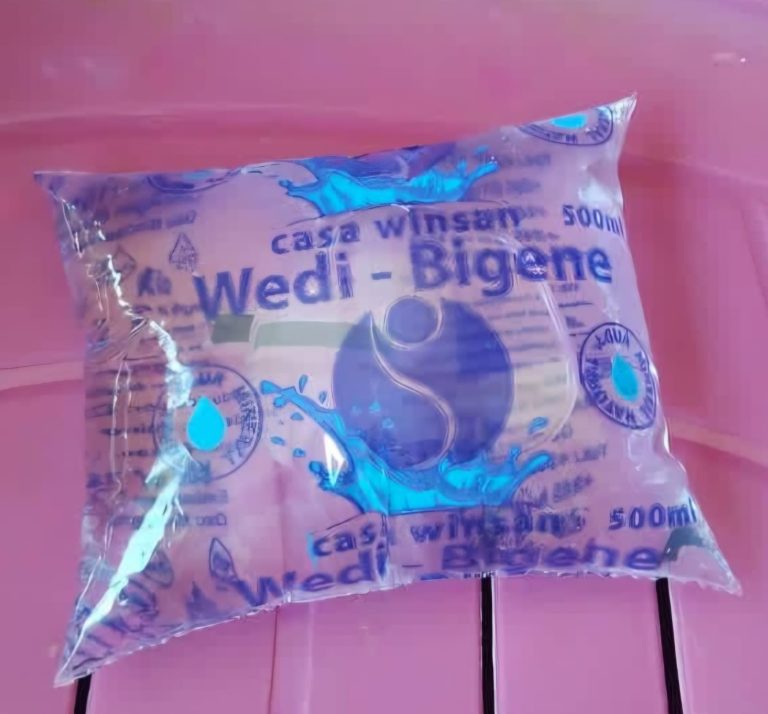
At Casa Winsan, an initiative founded by pharmacist Alfredo Sambù under the Guimeds project, we recognize that water is the foundational element linking human health, agriculture, and environmental stewardship. Operating out of Bigene in the Cacheu Region of Guinea-Bissau, Casa Winsan was built on a deep appreciation for the Earth’s natural systems and traditional wisdom.
In the Balanta language spoken natively in Guinea-Bissau, the word for water is Wedi. Water is recognized not merely as a compound, but as a living bridge that sustains communities, nourishes local agriculture, and fuels life. By adhering strictly to World Health Organization (WHO) safety standards, Casa Winsan produces and distributes clean, clear drinking water while empowering local farmers with organic agriculture training.
Understanding how natural materials like starch interact with Wedi reminds us of the delicate balance required to protect our ecosystems. Just as bio-based materials rely on water to return safely to the soil without pollution, human communities rely on pure, unpressured access to safe water to thrive.
Through sustainable practices, local empowerment, and authentic stewardship, we work every day to nourish the health, economy, and natural heritage of Guinea-Bissau and beyond.
What to join us, support us or work with us? Fill out this form and we will get back to you: https://guimeds.com/work-with-us.