In our journey toward a more harmonious relationship with the Earth, modern science offers remarkable innovations. Among these, biodegradable polymers and starch-based bioplastics stand as beacon solutions, promising to replace single-use petroleum plastics and return harmlessly to organic soil. In academic white papers and pristine laboratories across the globe, these eco-friendly materials perform beautifully. They pass standard compostability certifications, endure precise thermal stress tests, and degrade smoothly under controlled ultraviolet radiation.
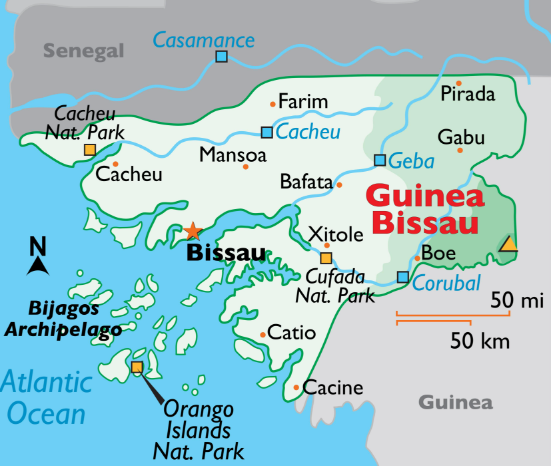
Yet, when these same materials are fashioned into water sachets and deployed into the vibrant, sun-baked streets of Guinea-Bissau and across West Africa, a profound gap reveals itself. The pristine environment of a climate-controlled laboratory cannot replicate the living, unpredictable forces of tropical distribution.
To design bioplastics that truly serve humanity without failing, we must look beyond standard bench testing and understand the true mechanical, thermal, and climatic stresses these packages endure every day.
The Illusion of the Controlled Laboratory
To understand why bio-based materials behave unexpectedly in real-world settings, one must first look at how standard materials testing is conducted. International standards—such as European Norm EN 13432, ASTM D6400, or ISO 14855—were established to provide uniform, repeatable benchmarks for compostability and material strength.
In a typical testing facility, polymer samples are placed inside static environmental chambers. Temperature is held at a steady state, relative humidity is regulated by automated sensors, and artificial UV lamps emit fixed wavelengths for pre-set intervals.
While these protocols offer valuable baseline comparisons, they operate under a fundamental flaw: isolation. In a laboratory, physical stressors are introduced one at a time under static conditions. In the real world, environmental forces do not wait their turn; they strike simultaneously, compounding their destructive effects on molecular structures.
The Four Real-World Stressors Missing from Lab Benchmarks
When a water sachet leaves a production facility in West Africa, it enters a dynamic environment where climate, human activity, and mechanical friction interact continuously.
1. Synergistic Thermal and Photolytic Stress
In standard UV testing (such as ISO 4892), plastic films are exposed to artificial UV-A or UV-B light at moderate, stable temperatures. However, on the streets of Bissau or Bigene, direct sunlight does not merely emit UV rays—it transfers intense infrared heat.
When a bioplastic pouch rests under the tropical sun, surface temperatures can exceed 45°C (113°F). This elevated temperature pushes starch blends and polylactic acid (PLA) near their glass transition point (), causing polymer chains to become mobile and soft.
When high thermal mobility coincides with high-energy UV photon bombardment, photo-oxidative chain scission accelerates exponentially rather than linearly. The polymer breaks down at a rate far faster than any static lab model predicts.
2. Mechanical Hydro-Pressure and Internal Hydraulic Shock
A standard tensile test pulls a dry or static strip of plastic until it breaks. It measures ultimate tensile strength and elongation at break. But a water sachet is a dynamic, fluid-filled vessel.
As crates of sachet water bounce along unpaved rural roads or unpaved market paths, the water inside shifts violently. This generates internal hydraulic shock—sudden spikes of liquid pressure directed against the heat-sealed seams of the pouch. A bioplastic film that passes a static pressure test in a laboratory can easily yield under repeated hydraulic impacts when its molecular structure is simultaneously softened by ambient heat.
3. Cyclic Humidity and Micro-Structural Fatigue
Laboratory moisture testing typically exposes plastics to constant humidity. In contrast, West African coastal climates experience dramatic diurnal fluctuations. Relative humidity may drop during hot, dry afternoon breezes and surge past 90% during humid tropical nights or sudden rain showers.
Hydrophilic bioplastics absorb water vapor during high-humidity cycles, causing the starch matrix to swell. As temperatures rise and humidity drops, the material rapidly loses moisture and contracts.
This continuous cycle of expansion and contraction creates micro-structural fatigue within the polymer blend, giving rise to microscopic fissures that eventually become visible leaks.
4. Abrasion, Friction, and Physical Handling
Before a sachet of water reaches a thirsty consumer, it is handled repeatedly. It is stacked in heavy woven sacks, jostled in wooden transport boxes, placed on ice trays, and carried through busy roadside markets in large metal basins balanced by street vendors.
This continuous surface friction strips away thin protective barrier coatings applied to bioplastics. Once the protective outer layer is scuffed or scratched, humidity and liquid water penetrate the vulnerable starch core beneath, initiating premature degradation while the product is still on the market shelf.
Comparing Laboratory Standards with Tropical Market Realities
To visualize why current testing standards fall short for tropical applications, we can contrast standard laboratory testing parameters with the operational conditions found in West African street distribution:
| Environmental Variable | Standard Lab Test (e.g., EN 13432 / ASTM) | Real-World Tropical Conditions | Practical Impact on Bioplastics |
| Temperature Profile | Constant 20°C to 23°C (or fixed 58°C industrial compost) | Fluctuating 28°C night to 48°C direct sun surface heat | Softens polymer matrix; lowers mechanical barrier threshold |
| Moisture Exposure | Fixed dry air or 100% static immersion | Dynamic cyclic humidity combined with internal liquid contact | Causes cyclic swelling, internal leaching of plasticizers, and seam weakening |
| Mechanical Stress | Static pull or drop test on dry/fresh samples | Continuous vibration, liquid sloshing, stacking weight, street handling | Triggers seam fatigue and micro-tears from internal hydraulic pressure |
| UV Radiation | Filtered artificial UV lamps without radiant thermal shock | Full-spectrum intense tropical solar irradiance with simultaneous heat | Triggers rapid photo-oxidation and material embrittlement |
| Abrasion Factor | None; samples tested in isolation | Rough transport crates, metal sales basins, surface friction | Scratches protective coatings, exposing water-sensitive inner layers |
Bridge Building: Developing Context-Specific Material Testing
Bridging the gap between laboratory success and field durability requires a paradigm shift in material engineering. Rather than relying solely on standardized European or North American test benchmarks, researchers and packaging designers must adopt context-specific environmental testing:
- Combined Multi-Factor Testing Chambers: Testing equipment must subject bioplastics to simultaneous heat, UV radiation, high humidity, and physical tension to observe true compound degradation effects.
- Dynamic Hydraulic Fatigue Testing: Bioplastic sachets filled with liquid water should undergo continuous mechanical agitation and vibration while heated to simulate real transit over rough terrain.
- Local Soil and Aquatic Field Studies: Material samples should be tested directly in local soil chemistries and native water sources to record accurate, real-world biodegradation rates under ambient conditions.
Casa Winsan: Pure Water, Wisdom, and Sustainable Stewardship
At Casa Winsan—a foundational initiative under the Guimeds project founded by pharmacist Alfredo Sambù—we recognize that true innovation must always be rooted in practical reality and profound respect for natural laws.
Operating out of the Casa Winsan Business Center in Bigene, located within the Cacheu Region of Guinea-Bissau, our work is guided by a holistic vision: combining modern health science with deep-rooted community wisdom to enhance local well-being.
Alfredo Sambù, drawing on his background in pharmacy in Vicenza, Italy, returned to his home region to establish our production headquarters in Bigene rather than the capital city of Bissau.
This decision reflects personal gratitude to his native village of Bambaia, while strategically positioning our operations near key trade routes with Senegal to alleviate regional water shortages and foster local economic resilience.
In the native Balanta language of Guinea-Bissau, water is known as Wedi. This word conveys far more than a simple chemical formula; it honors water as an essential, life-sustaining presence that belongs to every human being.
In full alignment with the guidelines of the World Health Organization (WHO), Casa Winsan purifies and distributes safe, clear drinking water to ensure that healthy, pathogen-free hydration is accessible to everyone, regardless of social standing.
Our commitment extends beyond water purification. Casa Winsan empowers local farming communities with practical resources, training, and sustainable organic agricultural practices.
By understanding how environmental forces interact with natural materials, we strive to advance ecological solutions that preserve our precious soil, protect our water sources, and foster long-term health and abundance across Guinea-Bissau and beyond.
What to join us, support us or work with us? Fill out this form and we will get back to you: https://guimeds.com/work-with-us.