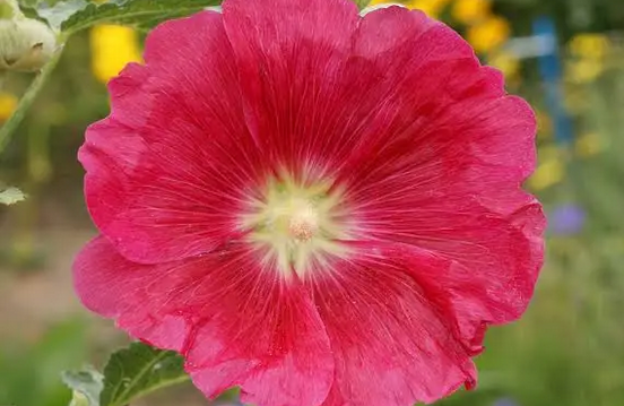
The Hollyhock, or Alcea rosea, is a flower celebrated for its statuesque beauty. Yet, to see it only as an ornament is to overlook the profound wisdom held within its velvety petals, leaves, and roots. For centuries, this beloved plant has served as a gentle yet powerful apothecary, offering remarkable remedies for soothing irritated skin and supporting respiratory health.
The plant’s medicinal lineage is deeply rooted in history. The ancient Greeks, including the botanist Theophrastus, documented its virtues, and its use was passed down through Roman apothecaries and into the annals of European folk medicine.
Known as a member of the mallow family (Malvaceae), it shares a kinship with the famed Marshmallow plant (Althaea officinalis), from which its potent healing properties are derived. Let us delve deeper into the gentle magic of this garden guardian.
A Soothing Balm for Troubled Skin
The primary secret to Hollyhock’s therapeutic touch lies in a remarkable substance called mucilage. This is a complex of hydrophilic polysaccharides that, when combined with water, swells to form a soothing, gel-like substance. While many plants contain mucilage, Hollyhock is particularly rich in it, making it a first-class emollient and skin protectant.
See the publication, Hollyhock: Health Applications, Bioactive Components, and Benefits.
When applied topically, this mucilage works on several levels. It forms a fine, breathable film over the skin that acts as a “second skin.” This barrier performs two critical functions: it locks in the body’s natural moisture, preventing dehydration, and it shields the sensitive, inflamed tissue from environmental irritants.
Unlike heavy, synthetic occlusives that can clog pores, Hollyhock’s natural film allows the skin to breathe and heal.
This makes it an invaluable ally for a host of skin complaints:
- Calming Inflammation and Burns: For skin reddened by the sun’s persistent gaze or irritated by insect bites, a Hollyhock preparation offers immediate, cooling relief.4 Its natural anti-inflammatory compounds work in synergy with the mucilage to reduce swelling, redness, and the sensation of heat.5
- Hydrating Chronic Dryness: For those with eczema, psoriasis, or simple xerosis (abnormally dry skin), Hollyhock provides profound, gentle hydration. It helps to soften rough, scaly patches and, crucially, can help break the debilitating itch-scratch cycle that often accompanies these conditions.
- Promoting Graceful Healing: When applied to minor cuts, scrapes, or abrasions, the moist environment created by Hollyhock’s gel prevents a hard scab from forming. This promotes faster cell regeneration and more flexible healing, reducing the likelihood of scarring.
To access these benefits, one can create a simple poultice by crushing fresh flowers and leaves into a paste and applying it directly. For a more shelf-stable remedy, a Hollyhock-infused oil is superb.
Gently heat dried Hollyhock flowers in a carrier oil like olive or almond oil over a low heat for several hours, then strain. This fragrant oil can be used directly or transformed into a rich, protective salve with the addition of beeswax.
A Breath of Fresh Air for the Lungs
The same mucilaginous properties that make Hollyhock a friend to the skin also make it a champion for the entire respiratory system. Internally, it acts as a premier demulcent, a substance that soothes and protects irritated or inflamed internal tissues.
When you sip a warm tea made from Hollyhock flowers, the mucilage coats the mucous membranes from the pharynx down into the bronchial passages. This provides immediate relief from the raw, scratchy feeling of a sore throat and can quell the nerve-tickling spasms of a dry, hacking cough. It’s like draping a velvet cloak over an irritated airway, allowing it to rest and recover.
Simultaneously, Hollyhock functions as a mild but effective expectorant. While soothing the throat, it also helps to hydrate and thin viscous mucus lodged deeper in the chest. This action makes coughs more productive, helping the body to naturally and gently clear congestion from the lungs without the harshness of many over-the-counter remedies.
This dual-action capability makes it uniquely suited for the complex cough that starts dry and later becomes congested.
For respiratory support, a warm infusion is ideal. Steep two teaspoons of dried Hollyhock flowers in a cup of freshly boiled water for at least 15 minutes, covered, to trap the volatile oils. For a more potent synergistic blend, consider adding a pinch of thyme (an antimicrobial) or mullein (another excellent respiratory herb).
Beyond the Flower: The Wisdom of the Whole Plant
While the beautiful flowers are most commonly used, traditional herbalism recognizes the value of the entire Hollyhock plant.
The roots, in particular, contain the highest concentration of mucilage, making them medicinally parallel to their famous cousin, Marshmallow root.
A decoction of the root (simmered in water for 20-30 minutes) creates a potent, viscous liquid that is exceptional for soothing internal irritations, especially along the digestive tract. It can help calm inflammation associated with gastritis or acid reflux.
The leaves are also rich in soothing compounds and can be used interchangeably with the flowers in teas and poultices. Even the seeds were traditionally used in some cultures as a diuretic to gently encourage fluid release.
Cultivating Your Own Apothecary
One of the greatest joys of Hollyhock is its ease of cultivation. These hardy biennials or short-lived perennials ask for little more than a sunny spot and well-drained soil. Plant them at the back of a border where their towering height can be appreciated without overshadowing smaller plants.
For medicinal use, harvest the flowers on a dry morning just after the dew has evaporated, when they are in full, vibrant bloom. To preserve them, lay the blossoms in a single layer on a mesh screen in a dark, dry, and well-ventilated room.
Once they are crisp to the touch, store them in an airtight glass jar away from direct sunlight. Their gentle healing power will now be available to you throughout the year.
From its steadfast presence in the sun-drenched gardens of Verona to its quiet efficacy in a soothing cup of tea, the Hollyhock embodies a perfect harmony of beauty and utility.
It stands as a tall, elegant reminder that the remedies we seek are often not in a pharmacy, but waiting patiently just outside our door, offering their gifts to anyone who takes a moment to see them.